Re-Examining Innangard, Utangard, and Frith Toward A Historically Grounded Heathen Ethos


I was recently contacted by one of my Patreon supporters, who asked me the following question:
Have you ever written on innangard and utamgard. In particular, improperly extending moral considerationa or frith beyond the innangard?
While I have mentioned these concepts in multiple - maybe even dozens - of podcast episodes, I relaized I had not ever dedicated a blog post to these topics. So, in response to this question, I will attempt to answer this in ways that provide historically backed information, and clarify what modern interpretations have done to skew the sources. What you are about to read will likely challenge your current worldview (I was certainly challenged similarly before coming to my conclusions) so be prepared to get uncomfortable and be held accountable.
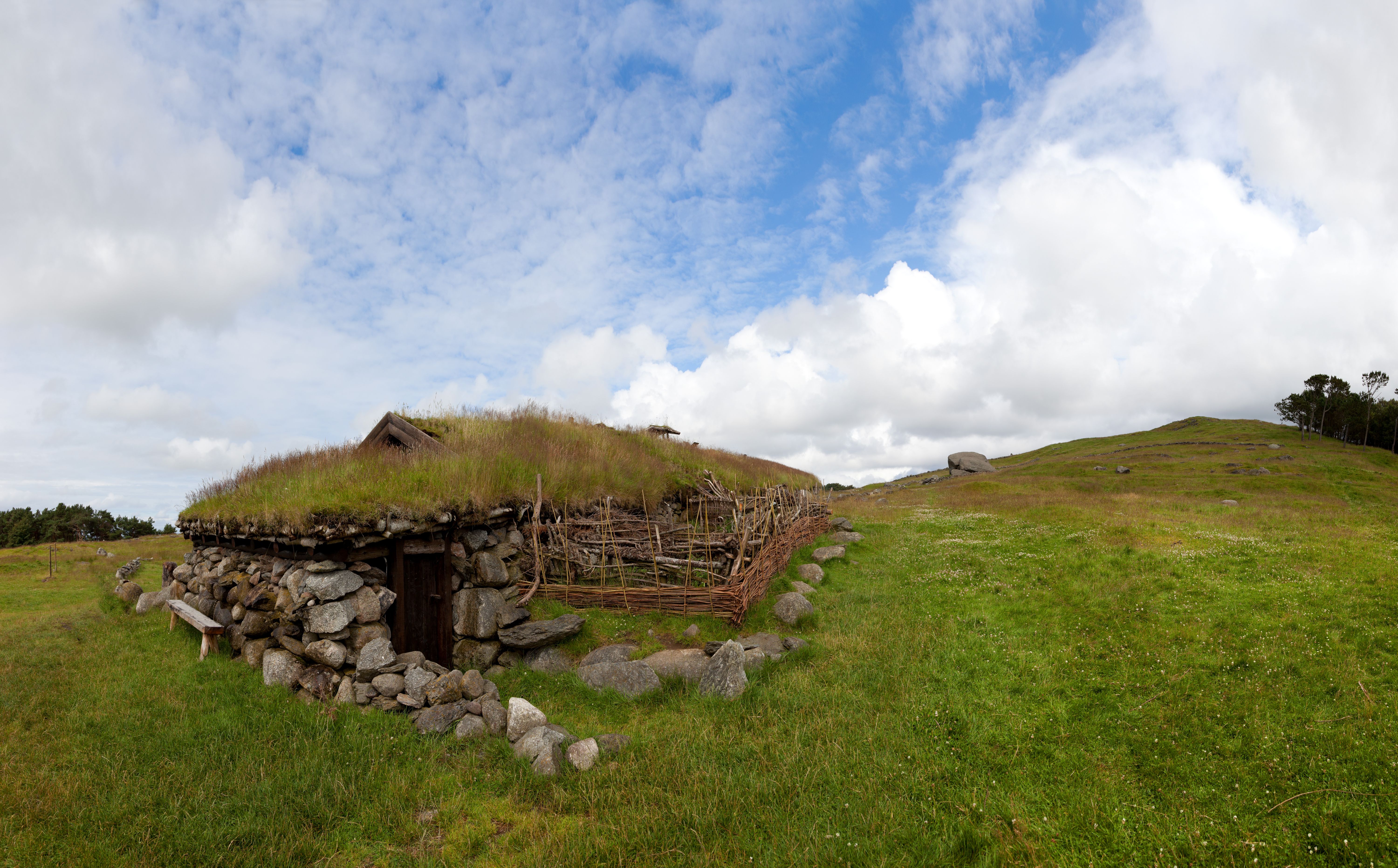
In modern Heathen discourse, especially within Ásatrú and Germanic Neopagan communities in the United States, the paired concepts of innangard and utangard are frequently invoked as foundational worldview categories — the safe inside versus the hostile outside of community and culture — with frith (Old Norse friðr, Old English friðu) held as the peace and security enjoyed by those within the innangard. But when we look closely at medieval linguistic sources and responsible scholarship, we find that the terms as used today are far more modern constructions than ancient categories — and that understanding this matters deeply for how modern Heathens think about community, belonging, and ethical responsibility.
Innangard and Utangard: Language Before Ideology
Let's begin with getting one thing clear: the Old Norse terms often cited in modern Heathenry — innangarðs, innangarða, útangarða, útangarðs — do indeed exist in medieval texts, but their literary use is far more mundane than many modern glosses assume:
- Innangarðs simply means “within doors.”
- Innan garða means “within the yard or enclosure.”
- Útangarða means “outside the yard.”
These occur in legal codes and sagas composed well after the Christianization of Iceland and were used in practical, not cosmological or spiritual, senses (e.g., describing spaces inside versus outside homes or fenced enclosures).
In case I wasn't clear, let me emphasize that the modern compound words “innangard” and “utangard” as worldview categories — especially in the sense of an ordered “in-group” versus chaotic “out-group” — are not attested in Old Norse ritual, poetry, or myth as spiritual teachings or religious constructs. They are modern interpretive borrowings, not discrete categories of pre-Christian Germanic cosmology.

The Americanization and Politicization of the Terms
The widespread use of innangard and utangard in U.S. Heathen communities owes much to 20th-century reinterpretations and, in some cases, to völkisch (folkist) ideologies:
- In publications from groups like the old Ásatrú Free Assembly and Ásatrú Folk Assembly, innangard was defined as “the enclosed world of the human community, within which order, law and security are found,” and utangard as “the wild and chaotic world” against which this ordered space must be protected.
- Stephen McNallen’s writings in Asatru: A Native European Spirituality (and related organizational materials) made innangard synonymous with a racially defined “Folk Within,” and utangard the adversarial “forces against the Folk,” projecting contemporary racialist frameworks onto what were originally simple spatial descriptors in medieval Icelandic texts.
As much as I have recommended his work, it's hard not to trace this interpretive pathway back through Vilhelm Grønbech’s The Culture of the Teutons. While Grønbech’s work has influenced many Heathens, it is deeply colored by Romantic nationalist thought and pseudo-archaeological reconstructions of “Teutonic” identity. In Grønbech’s hands, Midgard (literally “middle enclosure”) became something akin to a sacred ethnic homeland opposed to Utgard, a concept which in turn was absorbed into some modern Heathen interpretations of innangard/utangard dualism.
Medieval Usage is Practical, Not Ideological
One crucial point that I would like to emphasize, is that the roots of the Old Norse terms are not mystical or cosmological:
- In the Poetic Edda and Prose Edda, the realm of giants is called Utgard (e.g., in the tale of Útgarða-Loki). But here the term útgarðar simply describes “outer buildings” or “lands outside the enclosures,” not a metaphysical antithesis to human order.
- Narrative elements in Norse myth — such as Thor’s journey to face giants beyond Midgard’s boundaries — are literary tropes about crossing physical boundaries in mythic stories, not indicators of a systematic spiritual dualism teaching “innangard vs. utangard” as moral categories.
Thus, the linguistic and textual evidence supports a much simpler spatial division — inside and outside of built, social space — rather than a deep theological or ethical dichotomy in ancient belief.
Frith: The Real Germanic Social Value
Where medieval Germanic cultures did have a robust concept was in frith — the peace, protection, and mutual obligation binding kin, kindreds, and lawful communities. Frith was not abstract; it was grounded in relationships, law, and reciprocity — and it was enforceable. Medieval legal texts (such as Grágás) reflect how frith was lost when one became an outlaw (excluded from society’s legal protections). Although the innangard/utangard vocabulary may not be directly present, frith is deeply documented in practice.
This underscores that if we want to recover a historically grounded Germanic ethos, focus should be on the relational and ethical structures (frith, law, compensation, hospitality) that can be demonstrably connected to medieval texts rather than on modern dualisms imported into the discourse.

Implications for Modern Heathen Communities
I believe that whether we like it or not... whether or not these facts make us uncomfortable... there is no way to rightly gainsay that everything I have stated thus far makes a sober and important point for contemporary Heathens: using innangard and utangard as rigid in-group vs. out-group moral categories can unintentionally echo ideologies (e.g., Nordicist völkisch thought) that have been used to justify exclusionary and even harmful worldviews in the modern era — ideologies that do not reflect the actual complexity of medieval Germanic religion and law.
Instead, a historically and ethically robust modern Heathen practice can:
- Recognize frith as the real ancient social value — peace grounded in mutual obligation and accountability.
- Understand that ancient Norse and Germanic sources do acknowledge boundaries and dangers beyond community life (e.g., giants in myth, lawless spaces), but not in a way that implies a cosmic moral dualism of “us vs. them.”
- Resist appropriating terms or frameworks that have been shaped by ideological movements external to Old Norse religion.
In other words, frith — rather than “innangard” as an absolute moral boundary — better captures what mattered in historical Germanic cultures: the commitment to uphold peace, uphold reciprocal bonds, and maintain lawful sanctuary for those within one’s relational network.
Conclusion: A Grounded Heathen Perspective
When we root our understanding of innangard, utangard, and frith in rigorous philology and critical historical scholarship, we move away from unexamined dualisms and ideological borrowings and toward a more nuanced, ethically grounded Heathen worldview. Medieval Germanic peoples certainly recognized inside/outside spatial distinctions, but they did not articulate the innangard/utangard dualism as a cosmological ethics system. Modern Heathens reclaiming these ideas should therefore prioritize frith — understood as peace through community, law, and accountability — and be wary of modern political overlays attached to ancient vocabulary.
Modern Heathens (specifically those of us in the United States) must ask themselves the difficult questions and be prepared to face harsh truths. One such question is: How much of Heathenry in the U.S today is really rooted in Romanticism, völkisch ideology, and actual Nazi propaganda? If modern Heathenry really is focused on reconstruction, recreation, and reimagining of the Old Ways, we need to be clear about which old way we intend to follow. For some, the difficulty will be in pruning away beloved elements with roots in a relatively recent and decidedly dark past.
Key Sources:
- Laws of Early Iceland: Grágás I. Translated by Andrew Dennis, Peter Foote, and Richard Perkins. Winnipeg: University of Manitoba Press, 2006.
- Lindow, John. Norse Mythology: A Guide to the Gods, Heroes, Rituals, and Beliefs. Oxford: Oxford, 2001.
- Mees, Bernard. The Science of the Swastika. Budapest: Central European University, 2008.
- “Völkische Altnordistik: The Politics of Nordic Studies in the German-Speaking Countries, 1926-45.” In Old Norse Myths, Literature, and Society: Proceedings of the 11th International Saga Conference, edited by Geraldine Barnes and Margaret Clunies Ross, 316-326. Sydney: Centre for Medieval Studies, University of Sydney, 2000, 319.
- Mitchell, P.M. Vilhelm Grønbech. Boston: Hall-Twayne, 1978.
- Poetic Edda, The. Translated by Carolyne Larrington. Oxford: Oxford, 2014.
- Saxo Grammaticus. The History of the Danes, Books I-IX. Edited by Hilda Ellis Davidson, translated by Peter Fisher. Cambridge: D.S. Brewer, 1996.
- Simek, Rudolf. Dictionary of Northern Mythology. Cambridge: D.S. Brewer, 1993.
- Snorri Sturluson. The Prose Edda. Translated by Jesse Byock. London: Penguin, 2005.
- Stork, John. “Artifacts of Fascism: Nazi Books at the University of Cincinnati Libraries.” University of Cincinnati Digital Resource Commons website.
- Vigfusson, Gudbrand. An Icelandic-English Dictionary. Oxford: Oxford, 1874.
- Vikstrand, Per. “Ásgarðr, Miðgarðr, and Útgarðr: A linguistic approach to a classical problem.” In Old Norse religion in long-term perspectives: Origins, changes, and interactions, edited by Anders Andrén, Kristina Jennbert, and Catharina Raudvere, 354-357. Lund, Sweden: Nordic Academic Press, 2006.
- Wellendorf, Jonas. Gods and Humans in Medieval Scandinavia: Retying the Bonds. Cambridge: Cambridge, 2018.