Smoke, Herb, and Hearth: Reclaiming Smoke Cleansing in Heathen Practice


There is a particular word that can cause an otherwise innocent bundle of herbs to become surprisingly controversial:
Smudging.
Burn a bundle of herbs. Let the smoke move through a room. Pass it around a person. Use it before a ceremony. Suddenly, someone may tell you that what you are doing is cultural appropriation.
And sometimes, there is a legitimate reason for that criticism.
But sometimes, the criticism rests on a much broader assumption: that the use of smoke and burning herbs for purification, protection, blessing, or ritual belongs exclusively to Indigenous peoples of North America.
That claim simply does not survive historical scrutiny.
The use of smoke in ritual is not uniquely American. It is not uniquely Indigenous. It is not uniquely European, either.
It is human.
Across continents and throughout history, human beings have gathered plants, burned them, watched the smoke rise, and assigned meaning to what that smoke carried with it.
The important question is therefore not:
“Who owns smoke?”
The better question is:
“Whose tradition am I actually practicing?”
For a Heathen, that distinction matters.
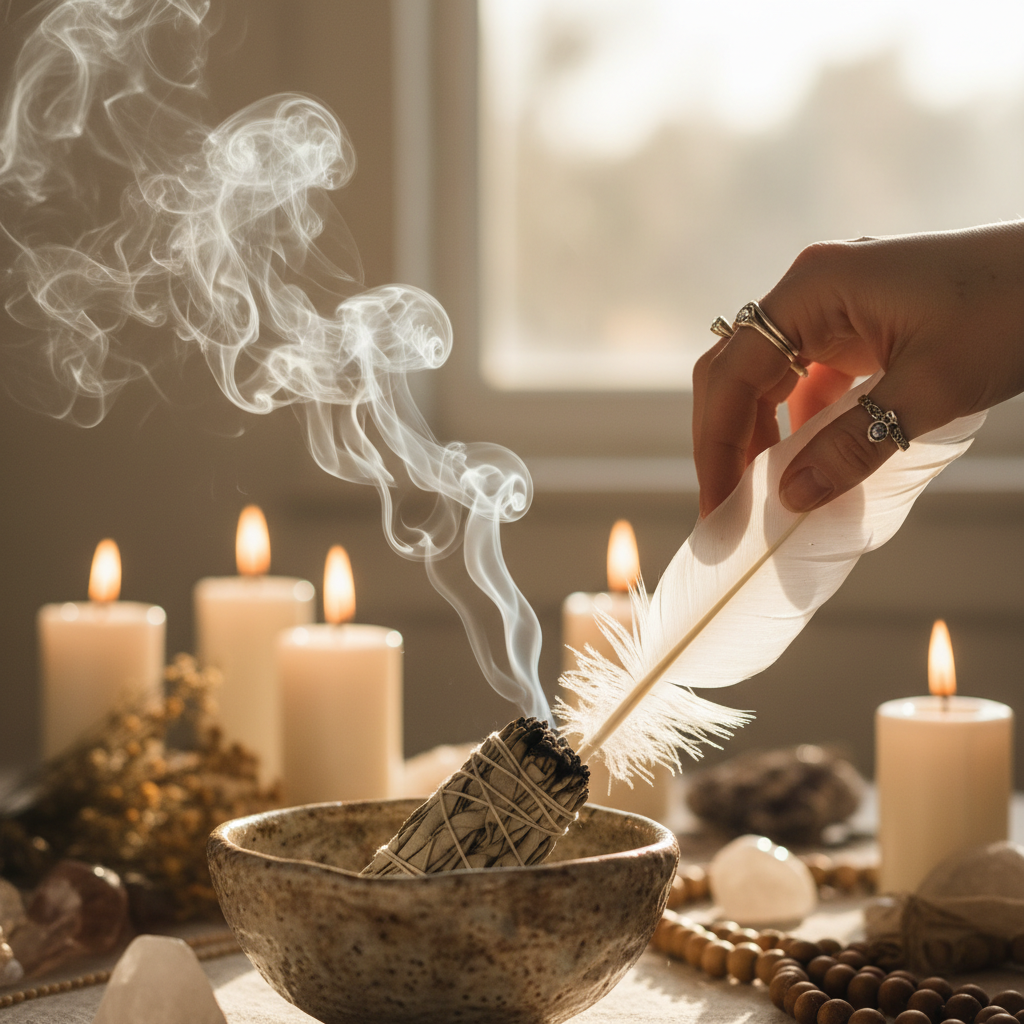
First, Let's Talk About the Word "Smudging"
One of the arguments frequently encountered in discussions about this subject is that the word smudging itself is an Indigenous American term.
It isn't.
The English word smudge has a much older history.
Merriam-Webster traces the verb to Middle English smogen, with its earliest known use dating to the fifteenth century. Its original meanings involved soiling, smearing, staining, or blackening something with dirt or soot.
The meaning associated with producing a smoky fire developed later. Historical etymological evidence places this use in the nineteenth century, while the noun smudge was already being used for a smoky fire or smoke-producing material. The compound smudge-stick, specifically associated with a Native American artifact, is documented by the beginning of the twentieth century.
So there is an important distinction here.
The English word is not an Indigenous word.
At the same time, the word became associated in modern English with certain Indigenous American ceremonial practices, and today many people use smudging specifically to describe those ceremonies.
That distinction should be respected.
If someone prefers to call what they are doing smoke cleansing, herbal fumigation, incense, räuchern, or simply burning herbs, there is absolutely nothing wrong with that.
In fact, when I am specifically talking about a Heathen practice, I generally prefer smoke cleansing because it makes the cultural distinction clearer.
But changing the English word does not change the history of the practice itself.
And that history is much bigger than North America.
Smoke Is Older Than Borders
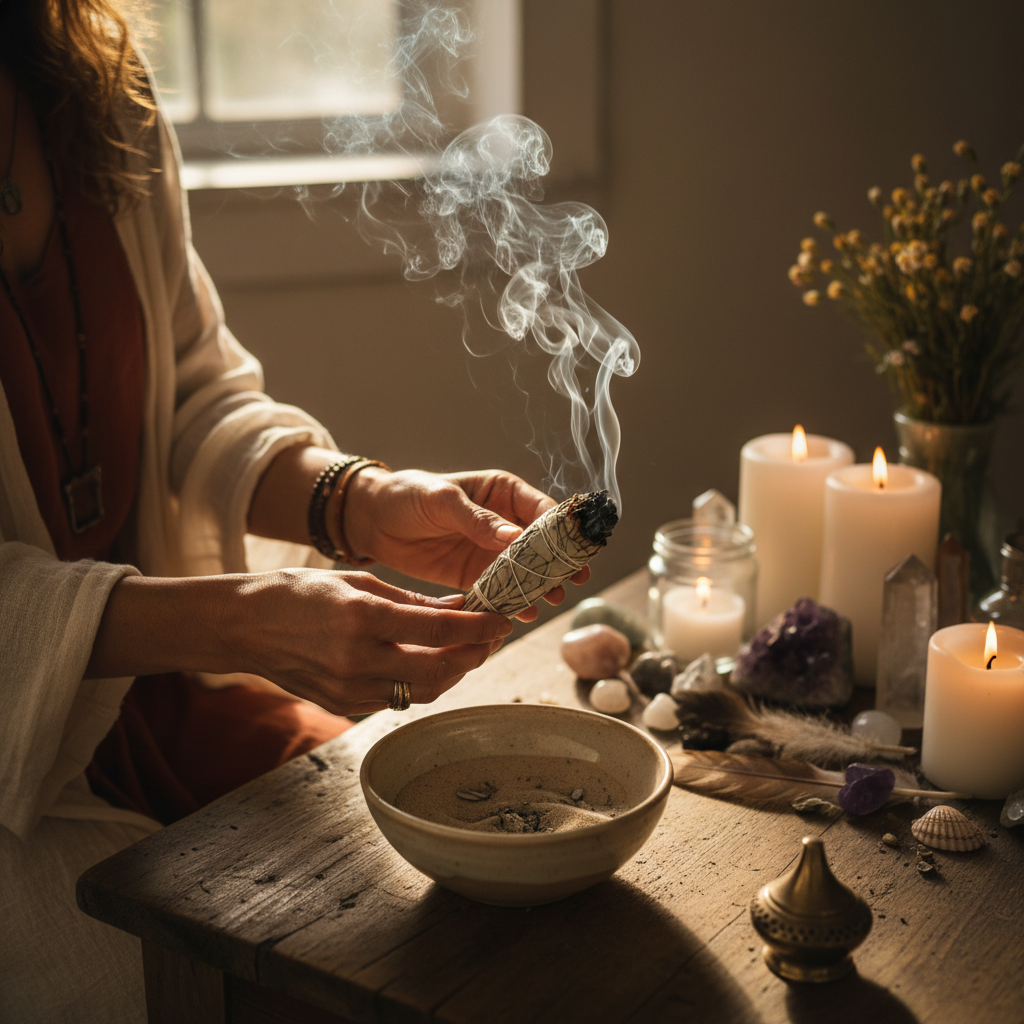
Long before modern nation-states, modern religions, and modern ideas about cultural ownership, human beings were burning things.
We burned wood for warmth.
We burned plants for food.
We burned resins and herbs because they smelled good.
We burned plants because smoke repelled insects.
And eventually, human beings began incorporating smoke into ritual.
The pattern appears across the world.
Smoke has been used to purify spaces, accompany prayer, mark transitions, protect people, bless homes, prepare sacred spaces, drive away unwanted influences, and create a physical boundary between ordinary and ceremonial activity.
These traditions exist across Europe, Asia, Africa, Australia, and the Americas.
That does not mean all of these traditions are the same.
They aren't.
A particular Indigenous nation may have specific ceremonial protocols surrounding a particular plant. Another culture may use a completely different plant for an entirely different purpose.
Similar actions do not automatically mean identical traditions.
But neither does cultural difference mean that the basic human action of burning a plant suddenly belongs exclusively to one people.
Fire is not owned by a culture. Neither is water. Neither is the wind.
And neither is smoke.
The Herbs of Our Own Lands
For those of us practicing a Germanic or broader European Heathen tradition, there is an enormous body of plant lore waiting to be rediscovered.
We do not need to reach across an ocean for sacred plants. Our ancestors had their own.
One of the clearest examples comes from the Old English Nine Herbs Charm, preserved in the Anglo-Saxon medical manuscript Lacnunga.
The charm describes mugwort as: “oldest of the herbs” and attributes to it protective powers against poison, disease, and harmful forces.
The charm then names additional plants including plantain and nettle and places them within a larger magical and medicinal worldview. This is important because it demonstrates something that is sometimes forgotten when modern people talk about “herbal spirituality.”
Our ancestors did not necessarily divide the world into the categories we do today.
Medicine could be spiritual. Spiritual practice could be medicinal.
A plant could be food, medicine, protection, and sacred substance simultaneously.
The plant was not merely an ingredient.
It had a relationship with the people who knew it.
Mugwort, Juniper, and the European Smoke Tradition
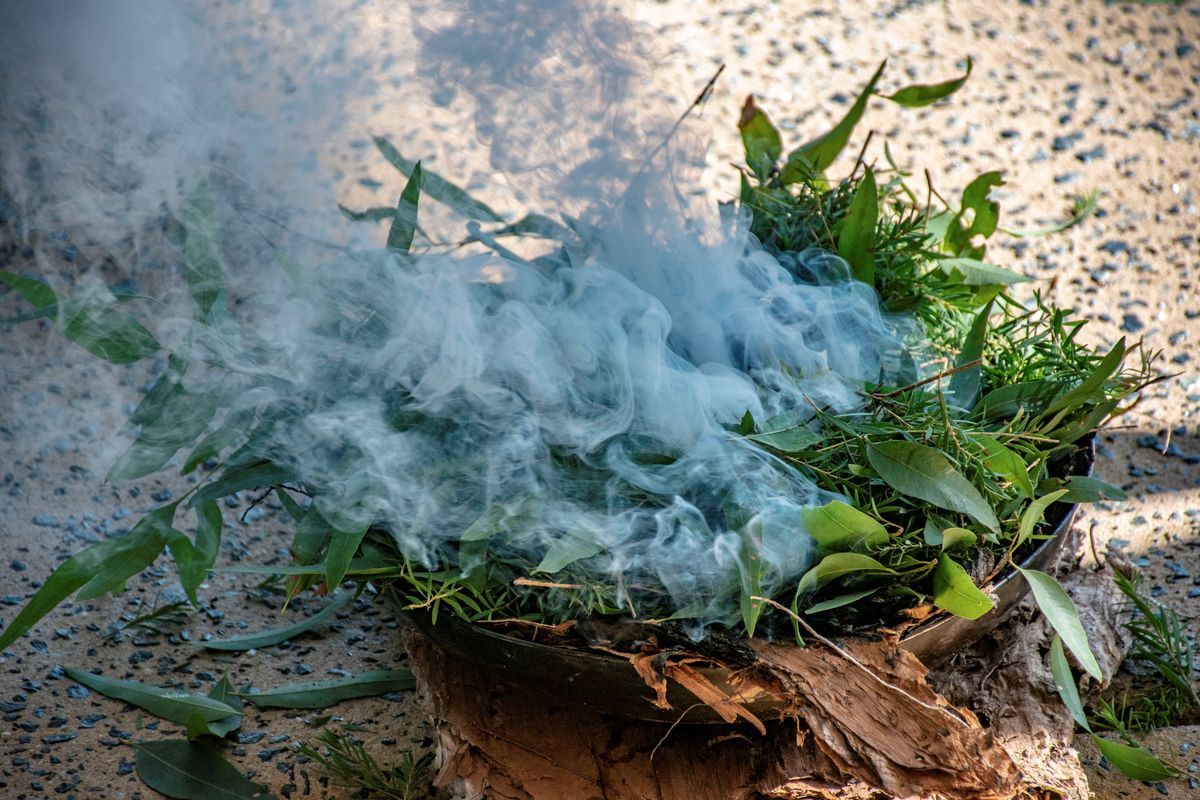
Mugwort is not the only example.
Juniper has an extensive history throughout Europe as a plant associated with household protection, fumigation, medicine, and folk practice.
Across northern and central Europe, smoke-producing plants and resins were used in homes, barns, stables, and other spaces.
This brings us to a particularly interesting surviving European tradition:
Hausräucherung. Literally, house fumigation.
In parts of the Alpine world (including Austria, Bavaria, Tyrol, Switzerland, and neighboring regions) forms of household fumigation remain associated with the Rauhnächte, the liminal nights surrounding the transition from the old year into the new.
Families may move through the house, outbuildings, stables, and farmstead carrying a smoking vessel filled with herbs, resins, or other local substances.
Juniper, mugwort (Beifuß), spruce resin, and other locally available plants can form part of these traditions.
The smoke moves through the rooms.The old year is symbolically driven out. The house is blessed. Protection is sought. Health and good fortune are invited into the year ahead.
The exact customs vary from region to region, as folk traditions almost always do. But the underlying concept is remarkably familiar:
Smoke transforms a space.
This is not a Native American practice that Europeans somehow imported. It belongs to a much older European pattern of household fumigation, folk medicine, seasonal ritual, and purification. And similar traditions involving juniper, herbs, and smoke have existed in northern European and Scandinavian contexts as well.
The Difference Between Inspiration and Imitation
This is where I think the conversation about cultural appropriation needs greater precision.
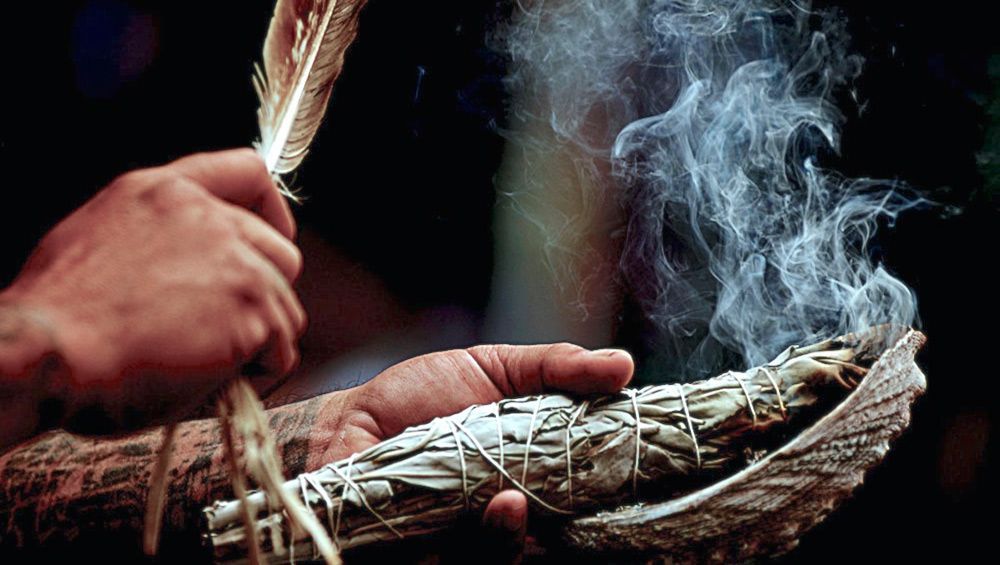
If someone purchases a commercially produced bundle of white sage (Salvia apiana), copies a ceremonial practice associated with a particular Indigenous nation, repeats words or prayers they do not understand, markets the practice as an ancient Native American ritual, and then sells that experience as a spiritual commodity... yes.
We should be able to have a serious conversation about cultural appropriation.
There are legitimate concerns surrounding the commercialization of Indigenous medicines and ceremonies.
There are also legitimate concerns about ecological exploitation and the commodification of plants that have deep cultural significance.
And there is an important historical context here.
Many Indigenous peoples in North America were subjected to laws and policies designed to suppress their religious and ceremonial practices. The fact that Indigenous ceremonies were historically restricted, punished, or marginalized while similar practices could later be repackaged for the commercial wellness market is a painful part of American history. That deserves respect.
But none of that means that burning herbs for ritual purification is itself an Indigenous American invention.
That is where the conversation sometimes becomes unnecessarily broad. There is a tremendous difference between imitating another people's ceremony and practicing a similar human behavior within your own cultural framework.
Don't Copy the Ceremony. Know Your Own.
Imagine a Heathen gathering in Norway. A practitioner walks into a blót carrying nine herbs gathered from the surrounding landscape.
Not white sage. Not plants imported from the American Southwest. Not a commercially packaged “Native American smudge kit.”
Instead, plants that actually belong to the land where the ritual is taking place.
Mugwort. Juniper. Local grasses. Local flowers. Local aromatic plants. Perhaps resin from local trees.
The herbs are gathered with care. They are dried. They are prepared. They are burned.
The smoke moves around the ritual space. The purpose is purification. The purpose is preparation. The purpose is transition. The purpose is to mark the difference between the ordinary world and the sacred act about to take place.
What part of that requires pretending to be Native American?
None of it.
In fact, the opposite is true.
The more we root our practice in the land, history, ecology, and cultural traditions of our own communities, the less reason we have to imitate somebody else's.
This Is Why Local Plants Matter
This principle became particularly meaningful to me when considering the use of herbs for a Heathen blót at Midgardsblot.
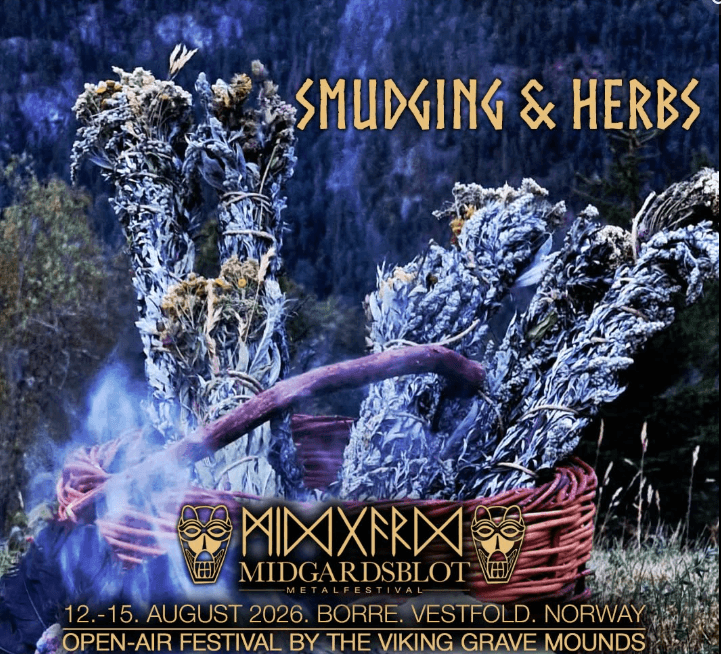
The idea was not to recreate an Indigenous American ceremony. It was not to construct a generic “pagan” ritual. And it certainly was not to take someone else's sacred medicine and rename it "Norse". The intention was much simpler:
Use the plants of the land. Nine wild herbs from the mountains of Telemark. Plants that belong to the landscape. Plants that exist within the ecological world surrounding the ritual. That approach feels fundamentally Heathen to me.
Because Heathenry is not supposed to be a costume.
It is not about collecting the most exotic spiritual objects from around the world and assembling them into something that looks sufficiently ancient.
It is about relationship. Relationship with land. Relationship with ancestors. Relationship with community. Relationship with the plants, animals, waters, weather, and other-than-human beings that surround us.
If I am standing in Norway performing a Heathen blót, why would I need a plant from California?
Why would I need to reproduce a ceremony belonging to someone else's people?
I don't.
The land already provides what I need.
We Should Be Careful With the Word "Authentic"
There is another trap here, however. It would be easy to swing too far in the other direction and claim:
This is exactly what the Vikings did.
We often don't know that. Historical evidence for pre-Christian Germanic religion is fragmented. Some practices survived in folklore, some survived in Christianized traditions. some appear in archaeological evidence, some are preserved in medieval literature, and some things simply disappeared. We should be honest about those limitations.
There is a difference between saying:
“Our ancestors definitely performed this exact ritual.”
and saying:
“This practice is consistent with documented European traditions and allows us to build a contemporary Heathen practice from historically and culturally appropriate materials.”
The second statement is much more defensible. Reconstruction requires humility. Revival requires creativity. And I think that modern Heathenry exists somewhere between the two.
Smoke Cleansing Is Not the Same Thing as Indigenous Smudging
Perhaps the easiest way to understand this is to stop treating the word smudging as though it describes one universal ritual.
It doesn't.
Indigenous peoples of North America are not one culture. There are hundreds of distinct nations, communities, languages, histories, and ceremonial systems. There is no single universal “Native American smudging ceremony.” Different peoples have different medicines, different protocols, different relationships with plants, and different ceremonial practices.
So when someone says: “Native Americans smudge.”, the statement itself is already too broad.
Some Indigenous peoples have ceremonial practices involving smoke. Some use specific plants. Some have protocols governing who may conduct particular ceremonies. Some have different names and traditions entirely.
The respectful thing to do is not flatten all of those traditions into one generic practice.
And that same principle should apply to European traditions.
There isn't one universal “European smoke cleansing ceremony” either.
There are regional traditions.
Alpine traditions. Scandinavian traditions. German traditions. Slavic traditions. Celtic traditions. Folk traditions that developed independently in different places.
That diversity doesn't make European smoke traditions illegitimate. It makes them interesting.
So, Is Calling It "Smudging" Wrong?
Personally, I don't think the word is the most important part of the conversation.
If you want to call what you are doing smoke cleansing, that's perfectly reasonable. If you want to use the German Räuchern or Hausräucherung, even better when discussing the European traditions from which your practice draws inspiration.
If someone uses the word smudging simply because it has become common English terminology for burning herbs and cleansing with smoke, I don't think that automatically makes their practice an act of cultural theft.
But language matters. Words carry history. Context matters.
If you are practicing a Nordic ritual, describing it as a “Native American smudging ceremony” would obviously be inaccurate.
If you're using European plants within a European-derived ritual framework, call it what it is.
Smoke cleansing. Herbal fumigation. Räuchern. Whatever language best describes the tradition you are actually practicing.
We Don't Need to Borrow Everything
There is something deeper here that extends beyond smoke...
Modern Paganism and Heathenry sometimes suffer from a strange form of spiritual consumerism.
We gather things.
Crystals from one tradition. Herbs from another. Ceremonies from another. Words from another. Symbols from another. And then we put them all together and call the result “ancient.”
But sometimes the more meaningful path is the opposite. Look closer to home.
- What grew where your ancestors lived?
- What plants did they know?
- What trees surrounded their settlements?
- What did they burn?
- What did they use medicinally?
- What did they place in their homes?
- What survived in folk traditions?
- What did people do at the turning of the seasons?
- What did they do when someone died?
- What did they do when a child was born?
- What did they do when the harvest ended?
- What did they do when winter arrived?
There is an enormous amount of spiritual material already waiting for us. We don't need to take somebody else's.
The Smoke Carries Something
For me, this is ultimately why smoke cleansing belongs so naturally within a Heathen worldview.
Smoke is transformation made visible. A plant that was once rooted in the earth becomes fire. The fire transforms it. The solid becomes ash. The invisible becomes visible. And then the smoke rises.
It moves through the space. It touches the people gathered there. And eventually, it disappears into the air. That is a powerful metaphor for ritual.
We bring something into the fire that no longer needs to remain with us. Old grief, old conflict, old habits, old fears. The stagnant energy of a place. The weight of the previous season. We allow the smoke to carry it away. And when the smoke clears, the space is ready for something new.
This isn't about pretending that smoke possesses some magical ability to erase problems. It is about ritualizing transition. It is about giving the mind, body, community, and spirit a tangible action that says:
Something is changing.
The old is being released. The space is being prepared. We are entering something different.

Let the Smoke Speak in the Language of Your Land
I don't believe we need to fight Indigenous people over the use of smoke.
I don't believe we need to dismiss their concerns about the commercialization or imitation of their ceremonies.
And I don't believe respect requires abandoning every practice that happens to resemble something practiced by another culture.
Instead, I think we should become more discerning.
Know what you are doing. Know where it comes from. Know which plants you are using. Know whose ceremony you are participating in. Know what you are claiming.
And, whenever possible, know your own land.
If you are practicing a Heathen blót in Scandinavia, use Scandinavian plants.
If you are practicing a European folk tradition, learn about European folk traditions.
If you are practicing a particular Indigenous ceremony, learn from the people to whom that ceremony belongs rather than inventing your own version of it.
There is a difference between cultural exchange and cultural imitation. There is a difference between recognizing that human beings everywhere discovered the power of smoke and pretending that all smoke ceremonies are interchangeable. And there is a difference between borrowing someone else's sacred tradition and rediscovering your own.
That last one matters to me.
Because perhaps the answer isn't to stop burning herbs. Perhaps the answer is to stop looking everywhere else for something we have forgotten how to recognize at home.
When the herbs burn, they speak in the language of smoke. They carry what needs to leave. They open the space for what needs to come. And if those herbs came from the land beneath our feet, perhaps the smoke is doing something more than cleansing the room.
Perhaps it is reminding us where we stand.