Winter Nights: What the Sources Tell Us—and Why the Moon Debate Remains


Each autumn, modern Heathens encounter a familiar question: when should we observe Winter Nights? Two answers circulate. One places it at the first full moon after the autumnal equinox. The other waits for the first new moon after the equinox and then observes the following full moon. Sometimes these rules select the same moon. Sometimes they put communities almost a lunar month apart.
For people who care about historical practice, that difference matters. But before turning it into a test of who is observing “correctly,” we should ask a more basic question: what do our sources actually say?
There is meaningful evidence for observances at the beginning of winter. There is also evidence for lunar reckoning. What we lack is an early source explicitly prescribing either of these two equinox formulas for Winter Nights across the Germanic world.
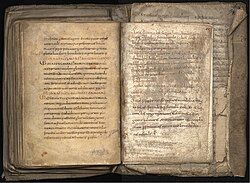
Bede: a winter full moon, but no explicit equinox formula
Writing in 725, Bede describes the older English calendar in chapter 15 of De temporum ratione, usually translated as The Reckoning of Time. His subject is the English months, not a Scandinavian festival calendar.[1]
He says that the English reckoned months by the moon, identifies Winterfylleth with October, and explains its name through winter and the full moon. His key clause is:
a plenilunio eiusdem mensis hyems sortiretur initium
Literally: “winter took its beginning from the full moon of that same month.” This translation is mine.
Bede also describes a principal division into summer and winter, and an additional lunar month inserted in some years. His account therefore supports lunar months kept in a seasonal framework. It does not explain the complete rule for assigning Winterfilleth to a particular lunation.[1]
That distinction matters. “The full moon of that month” is not the same instruction as “the first full moon after the autumnal equinox.” Nor does Bede say “the full moon following the first new moon after the equinox.” Both require an additional interpretive step.
What the Norse narratives preserve
The Scandinavian evidence brings us closer to Winter Nights as an observance, although it does not settle the competing calculations.
In Ynglinga saga, chapter 8, Snorri attributes a sequence of sacrifices to Óðinn: one towards winter for a good season, another in midwinter for crops, and a third in summer for victory. The passage establishes a seasonal sacrificial pattern. It does not name an equinox, a moon phase, or the exact term vetrnætr.[2]
It is also a narrative about a legendary past, written by a medieval Christian author. Its value should neither be dismissed nor confused with that of a contemporary ritual calendar.
Víga-Glúms saga, chapter 6, gives more specific evidence. During Glúmr’s visit to Norway, a feast is prepared at Winter Nights and a dísablót is performed. The Icelandic text explicitly uses both veturnóttum and dísablót. Edmund Head’s older English translation renders the latter more generally as a sacrifice to the gods, illustrating why checking the original terminology matters.[3]
This passage connects an offering to the dísir with Winter Nights in a particular setting. It does not establish that every dísablót everywhere occurred then, or supply an astronomical rule.
In Gísla saga Súrssonar, Þorgrímr prepares an autumn feast at the first night of winter and intends to sacrifice to Freyr. The surrounding description includes guests, drinking, and preparations in the hall. This is chapter 9 in George Webbe Dasent’s translation; chapter numbering differs between editions.[4]
Together, these passages preserve an observance with social and religious substance. The evidence concerns people gathering, making offerings, and marking winter’s arrival. Neither saga passage tells us which of the two modern moon formulas to use.
Tacitus: lunar timing in a different context
An earlier comparison comes from Tacitus’s Germania, chapter 11. He reports that assemblies met at the new or full moon, regarded as auspicious times, and that people reckoned periods by nights rather than days.[5]
This supports the significance of lunar phases in the practices he describes. It does not identify Winter Nights or place an autumn festival relative to an equinox. Evidence that the moon mattered is not evidence for every proposed moon rule.
The difference is easiest to see through a hypothetical sequence:
| Order of events | First full moon after the equinox | Full moon after the first new moon after the equinox |
| Equinox → new moon → full moon | Selects this full moon | Selects this full moon |
| Equinox → full moon → new moon → next full moon | Selects the earlier full moon | Selects the later full moon |
The second approach requires the selected lunar month to begin after the equinox. The first requires only that the selected full moon occur after it. They are different rules, even when they happen to produce the same date.
The Troth’s Winter Nights resource provides an identifiable example of the first interpretation. It suggests that, after setting aside Bede’s Roman month labels, Winterfylleþ can be understood as the first full moon after the autumnal equinox. Significantly, the page presents that connection as an interpretation, using the language of what would make sense.[6]
That is a modern reconstruction based on an early source. It is not Bede’s explicit instruction.
Andreas Nordberg: more than one way of counting the year
Andreas Nordberg’s Jul, disting och förkyrklig tideräkning (2006) is a substantial study of calendars and calendrical rites in pre-Christian Scandinavia.[7]
He distinguishes a year counted in weeks from a lunisolar calendar that probably existed alongside it. In his reconstruction, the seasonal quarters of the week year began approximately four weeks after the solar turning points. His English summary discusses Winter Nights within that framework.
For lunar Yule, he proposes the full moon following the first new moon after the winter solstice. This is an important distinction: his explicit formula concerns Yule and the winter solstice. It should not be quoted as though it directly names Winter Nights and the autumnal equinox.
Applying an analogous formula to autumn is a further reconstruction. An astronomical anchor used to regulate months also need not itself have been a festival day.
Nordberg’s work therefore complicates the idea that every historical reference to winter’s beginning must encode a single lunar rule. Week reckoning and lunar reckoning need to be considered separately.[7]

Dr. Andreas E. Zautner: reconstructing a bound lunar calendar
Dr. Andreas E. Zautner’s The Lunisolar Calendar of the Germanic Peoples appeared in English in 2021. Its subtitle identifies the project as a reconstruction from ancient, medieval, and early modern sources.[8]
His preface acknowledges the groundwork of Martin P. Nilsson and Nordberg, while explaining that his treatment extends to continental material and sometimes differs from theirs. The contents distinguish English, Danish, Faroese, and Icelandic evidence, and include dedicated discussions of the Faroese winter-moon rule and winter-night sacrifices.
The publicly accessible preview verifies that scope, but does not expose the full winter-moon discussion. Consequently, a particular autumnal-equinox formula should not be attributed to him here as a verified quotation.[8]
That limitation is worth stating plainly. Naming a researcher is not a substitute for identifying the passage supporting a claim.
Winter Nights is more than a disputed date
Terry Gunnell’s “The Season of the Dísir: The Winter Nights and the Dísablót in Early Scandinavian Belief” is a directly relevant academic study for further reading. Its bibliography can be confusing: it belongs to Cosmos 16, the volume dated 2000, but Gunnell’s own CV records publication in spring 2005.[9]
Even before resolving every calendrical question, the saga passages give us something important to work with. Winter’s arrival was represented through gathering, hospitality, sacrifice, and relationships with divine or other-than-human powers. Our inquiry should include those relationships, rather than shrinking the observance to a calculation.
It is reasonable to ask how a date was determined. It is also reasonable to ask what the gathering did for the people taking part.
Historical care without turning uncertainty into a contest
The strongest distinction we can make is between attestation, reconstruction, and present-day choice.
An attestation is what a source actually records: Bede’s winter full moon, a saga’s feast, or its named recipient of sacrifice. A reconstruction connects such fragments into a proposed calendar. A present-day choice determines how a household or community uses that research.
These are connected activities, but they carry different kinds of certainty.
A community can explain, “We use the first full moon after the equinox, following this interpretation of Bede.” Another can explain, “We wait for the next lunar month to begin, following this reconstruction.” Both explanations can be examined on their evidence. Neither needs to claim that an early author explicitly supplied words that the author never wrote.
Calling these two modern approaches separate “schools” is convenient, but can make the historical record look more sharply divided than it is. The sources are not two complete competing manuals. They are different kinds of testimony, from different places and periods, which we are trying to understand together.
For me, taking the sources seriously means allowing them to retain their uncertainties. We can care deeply about historical practice without making a disputed moon the measure of another Heathen’s sincerity.
Winter Nights gives us an opportunity to attend to the season, gather with intention, and consider the relationships expressed through our offerings. Research can deepen that work. It need not become a contest over who has earned the right to begin winter.
Sources and further reading
- Bede. De temporum ratione, chapter 15, “The English Months.” Latin text, Bibliotheca Augustana. For a scholarly English translation, see Faith Wallis, trans., Bede: The Reckoning of Time (Liverpool University Press, 1999), pp. 53–54. The short translation quoted above is made directly from the Latin.
- Snorri Sturluson. Heimskringla I, Ynglinga saga, chapter 8, p. 11. Translated by Alison Finlay and Anthony Faulkes (Viking Society for Northern Research, 2011). Full scholarly translation.
- Víga-Glúms saga, chapter 6. Icelandic text; Edmund Head’s 1866 English translation. The original is important because the older translation generalizes dísablót.
- Gísla saga Súrssonar. George Webbe Dasent’s English translation, chapter 9, “Thorgrim’s Slaying.” Locate the preparation of Þorgrímr’s feast when using an edition with different chapter divisions.
- Tacitus. Germania, chapter 11. Latin text and German translation; English translation. Relevant to lunar assemblies, not a direct Winter Nights attestation.
- The Troth. “Winter Nights”. A modern Heathen resource, cited here as evidence of a contemporary calendrical interpretation rather than as an early source.
- Andreas Nordberg. Jul, disting och förkyrklig tideräkning: Kalendrar och kalendariska riter i det förkristna Norden. Acta Academiae Regiae Gustavi Adolphi 91 (Uppsala, 2006). Author’s available text. See especially the English abstract and summary, pp. 147–159; seasonal quarters, pp. 150–152; lunar regulation and Yule, pp. 153–156.
- Andreas E. Zautner. The Lunisolar Calendar of the Germanic Peoples: Reconstruction of a Bound Moon Calendar from Ancient, Medieval and Early Modern Sources. English translation by Johanna Klapper (Books on Demand, 2021). ISBN 9783753431536. Accessible preview, contents, and prefaces. Especially relevant for further consultation: §§7.4.2.3 and 10.2.1. This article does not claim to have verified those sections in full.
- Terry Gunnell. “The Season of the Dísir: The Winter Nights and the Dísablót in Early Scandinavian Belief.” Cosmos 16 (2000), pp. 117–149, published 2005. Author’s CV clarifying publication; University of Iceland bibliographic record. Listed as further reading; its full argument is not paraphrased here.